

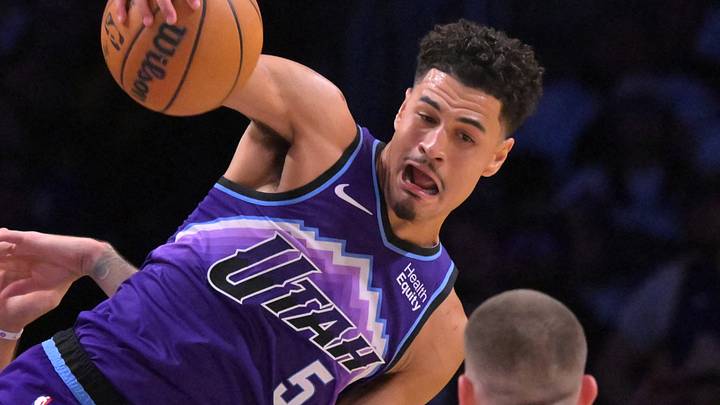
Josh Green has never been the NBA's most exciting name. In fact, when the Utah Jazz acquired him back in August, they had become his fourth team in the last two years. When he first became a Jazzman, the biggest read on the situation was "trade asset."
Green had more appeal as trade fodder in a deal for a potential upgrade, being paid $14.7 million, as that could have gotten Utah the Walker Kessler replacement they may have been looking for. However, since more evidence suggests Mo Bamba might be that Kessler replacement all along, they don't have to look into that.
That doesn't necessarily mean Green wouldn't be a trade asset, but what's making it tougher is that Green has been one of Utah's most consistent players, not to mention the most positively impactful. His numbers won't jump out at anyone by any means - 4.8 points, 1.7 rebounds, and 0.9 assists while shooting 45.6% from the field and 39.4% from three - but net rating does him justice.
He is the Jazz's only consistent rotation player with a positive net rating when he's on the floor (everyone else's is negative for obvious reasons), at plus-2.0. The difference between when he's on the court and when he's off is more telling, as they are minus-12.6 when he's off, making the difference minus-14.6 overall.
They're not great when Green is on the floor, but they're around average when he is, which is a step up from everyone else, which is why trading him, as tempting as it sounds, isn't so easy.
Utah shouldn't trade someone who fits his role
Green could be really useful in a deal, but in today's NBA, teams have seen what happens when they trade someone who fits with the team's identity and by extension, they also see what happens when they trade for someone who doesn't fit with them.
That's why trading Green isn't so simple. His ceiling is limited, but he knows what he is, and Utah knows exactly what they're going to get from him: dependable perimeter defense and floor-spacing, though not elite at either. Still, that's better than what they've seen from the likes of Brice Sensabaugh, Isaiah Collier (who will be a free agent this summer), and Kyle Filipowski (what happened, dear boy?!).
If the Jazz pull the trigger on a trade it would be because a. they believe they are getting an upgrade who fits better and b. they have gotten the season back on track, which is something they haven't done yet. It's not out of the realm of possibility, but Green is among the few players on the Jazz that has shown his true worth for the team.
That's why a trade isn't necessarily not an option period, but not an easy decision to make.
 Add us as a preferred source on Google