

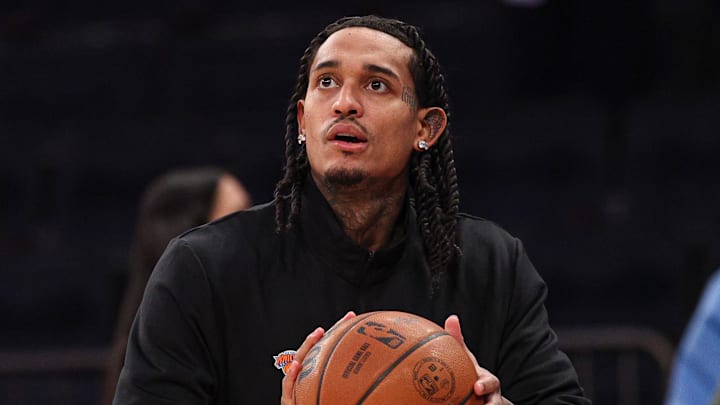
The past four seasons have not been easy on the Utah Jazz. First, they didn't know which route they were taking when they blew it up. Second, they had a pretty painful experience once they finally committed to the tank. Among their worst decisions (in hindsight) was extending Jordan Clarkson.
The logic seemed sound at the time. Because Utah was better than many expected in 2023, but not exactly good enough to know if they wanted to build off their surprising resilience, either Clarkson would fit on their next playoff team, or be an inexpensive trade asset.
However, in the two years that passed, Utah realized their best option was throwing the season away, making Clarkson superfluous. Also, because teams didn't value players like Clarkson enough to pay him what the Jazz were, they basically had no choice but to let Clarkson play out most of his deal until they could afford to waive him.
So yeah, the decision to keep him looked bad in hindsight. But now, the decision looks worse because Clarkson staying with the team as long as he did evidently got in the way of Keyonte George's development.
Extending Clarkson inadvertently limited George's opportunities
Without trying to bash Clarkson, who still praises Utah to this day, he's someone who needs the ball in his hands to be as effective as possible. To be fair, both he and Collin Sexton are like that, which took the ball out of George's hands.
George had a very noticeable sophomore slump, but given how many ball-dominant players on last year's roster played the same position as him, one could argue it wasn't entirely his fault, since he never got the chance to spread his wings. There's a very solid case that getting rid of Clarkson and Sexton played a role in his turning the corner in Year 3.
It's also possible that Clarkson's influence may have also helped George become comfortable in the NBA over time, but when the writing was on the wall that it was in Utah's best interest to play the youth, it was evident Clarkson was getting in the way.
To be fair, it's not like Clarkson nor the Jazz intended for this to happen the way it did once he agreed to it. Extending him simply turned out to be a terrible decision that has only looked worse since it first happened.
And even if this turned out to be a painfully bad choice for Utah, that shouldn't affect Clarkson's legacy. He was a good soldier who sprouted from empty calories to a worthwhile scorer thanks to Utah.
He was good for what the Jazz wanted from him when he was first acquired. It was only after their decision to extend him where things went south. Finally, yes, hindsight is 20/20, but it's clear that in the long run, Utah won't think too much of this.
 Add us as a preferred source on Google